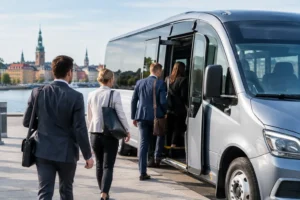
A group of 75 does not need 75 separate travel plans. It needs one departure time, one clear meeting point, enough space for people and luggage, and a coordinator who knows what happens if a flight, meeting, or event runs late. When searching for coach hire Copenhagen 75 passengers, the vehicle matters, but the planning behind it matters just as much.
A full-size coach turns a complex group movement into one coordinated journey. It is a practical choice for conferences, company gatherings, international delegations, sightseeing programs, sporting groups, school visits, and private celebrations where timing and comfort should not be left to chance.
Coach hire Copenhagen for 75 passengers: when it fits
A coach for up to 75 passengers is designed for groups that would otherwise require several vans or cars. That is not only a question of capacity. Multiple vehicles create multiple arrival times, different routes, separate driver communications, and more opportunities for guests to be left waiting at the wrong entrance.
With one coach, everyone travels together. The host can make one announcement. The group arrives at the same time. Guests do not have to navigate an unfamiliar city between hotel, venue, port, airport, or restaurant. For organizers, that simplicity can be the difference between a calm schedule and a day spent answering calls.
A 75-passenger coach is often the right solution when the group is close to full capacity and traveling with standard personal luggage or event materials. However, passenger count is only the starting point. A coach carrying 75 guests with large suitcases may need a different luggage plan than a group of 75 attending a local dinner with only coats and small bags.
That is why a proper quotation should be based on the whole assignment, not simply the number of seats.
Start with the details that shape the journey
The best group transport arrangements are decided before the coach arrives. A clear request allows the transport provider to recommend the right vehicle, route, pickup procedure, and timing from the outset.
For a useful proposal, share the travel date, preferred pickup time, exact locations, destination, number of passengers, and expected luggage volume. It also helps to mention flight arrivals, cruise schedules, hotel check-in times, wheelchair requirements, child seats, oversized equipment, or several planned stops.
Copenhagen can be straightforward to navigate, but access conditions vary. A coach may need a different drop-off point at a city-center hotel than at a conference venue outside the center. Some streets have limited turning space, and major events can affect access and traffic flow. An experienced coordinator plans around those details instead of discovering them at the curb.
For international groups, designate one on-site contact who can be reached on the day. This person does not need to manage every guest. They simply provide a reliable point of contact if the group is delayed, a meeting point changes, or passengers need direction after arriving.
Luggage capacity deserves an honest conversation
“Up to 75 passengers” describes seating capacity. It does not automatically guarantee space for 75 large checked bags, cabin bags, presentation equipment, golf bags, or trade-show materials. The right luggage solution depends on the type of group and the duration of the trip.
For example, a local event transfer may use nearly every seat without creating a luggage concern. A group arriving at Copenhagen Airport after an international trip will usually need more hold space and more time at pickup. If luggage is substantial, a luggage trailer, an additional vehicle, or a slightly different group arrangement may be the sensible answer.
There is no benefit in promising a layout that looks good on paper but leaves bags in the aisle or guests waiting while the driver tries to make space. A transparent provider will ask the necessary questions early and explain the options clearly.
Comfort is part of punctuality
A large group does not need unnecessary ceremony. It does need a comfortable, well-kept coach and a professional driver who is prepared for the route, the stops, and the pace of the day.
For journeys between Copenhagen and destinations elsewhere on Zealand or across Denmark, passenger comfort becomes especially relevant. Good seating, climate control, a clean interior, and orderly boarding create a more relaxed trip. They also help the group stay together and on schedule. A tired, confused, or scattered group takes longer to unload, reassemble, and move into the next part of the program.
The driver’s role is equally practical. Professional group transport depends on calm driving, clear coordination, and an understanding that guests may be unfamiliar with local pickup areas or Danish traffic conditions. Discretion is important too, particularly when transporting senior teams, invited guests, or private groups.
One coach or several smaller vehicles?
A full-size coach is usually the most efficient option when the group wants to travel together on the same schedule. It can simplify communication and create a more controlled arrival at the destination. For a conference delegation, a theater group, or guests moving between a hotel and a venue, this is often the strongest choice.
Still, one coach is not always the answer. Several smaller vehicles may work better if guests arrive at very different times, have separate destinations, or need flexible departures throughout the day. A mixed solution can also make sense when part of the group has significant luggage while others are traveling light.
The decision should be based on the real itinerary rather than the assumption that the largest vehicle is always best. The goal is not to fill seats. The goal is to make the movement of people feel organized, comfortable, and easy.
Fixed pricing makes group planning easier
For a large group, uncertain transport costs create unnecessary friction. Metered pricing is particularly unhelpful when the itinerary includes waiting time, changing pickup conditions, traffic delays, or several stops.
A fixed total price gives the organizer a clear number to approve and communicate. It should reflect the vehicle, route, expected duration, planned waiting time, stops, and any agreed extras. If the plan changes later, the impact should be explained before the journey whenever possible.
No meter. No surprises.
This approach is useful for businesses working to an event budget, travel coordinators managing a guest program, and families arranging a major occasion. It also makes internal approval easier because the transport arrangement is defined in advance rather than estimated after the fact.
How to keep boarding smooth on the day
Even an excellent coach and driver can be delayed by an unclear meeting point. Give guests a simple instruction before departure: where to meet, what time to arrive, who to contact, and whether they should bring luggage to the vehicle themselves.
At Copenhagen Airport, groups should be given a specific meeting procedure rather than a general instruction to “meet outside.” At hotels, confirm which entrance the coach can use and whether guests should wait in the lobby or at the curb. For events, plan the return pickup before guests disperse. A named exit, a visible meeting point, and a confirmed departure time avoid the familiar end-of-evening search for missing passengers.
For groups near the 75-passenger limit, it is wise to confirm the final headcount shortly before travel. This helps account for cancellations, last-minute additions, and guests who may require assistance boarding. Small details handled early protect the whole schedule.
A coordinated coach solution across Denmark
A coach arrangement may begin in Copenhagen and continue to Roskilde, Køge, North Zealand, Billund, or another destination in Denmark. The planning principles remain the same: accurate passenger numbers, realistic timing, clear luggage information, and one accountable contact person.
SkyLimousine coordinates coach travel for groups of up to 75 passengers with professional drivers, carefully planned logistics, and a clear fixed price. The focus is not simply on supplying a large vehicle. It is on making sure the group is collected properly, travels comfortably, and arrives ready for what comes next.
For your next group movement, begin with the itinerary rather than the vehicle alone. Share the number of guests, their luggage, the timing, and the purpose of the trip – then let the transport plan be built around the day you actually need to run.